/
•
•
Detailed stories on technology startups, business and economic current affairs.
Shared rides seemed tailor-made for India’s congested cities. Yet, economics, trust and regulation kept the idea from scaling.


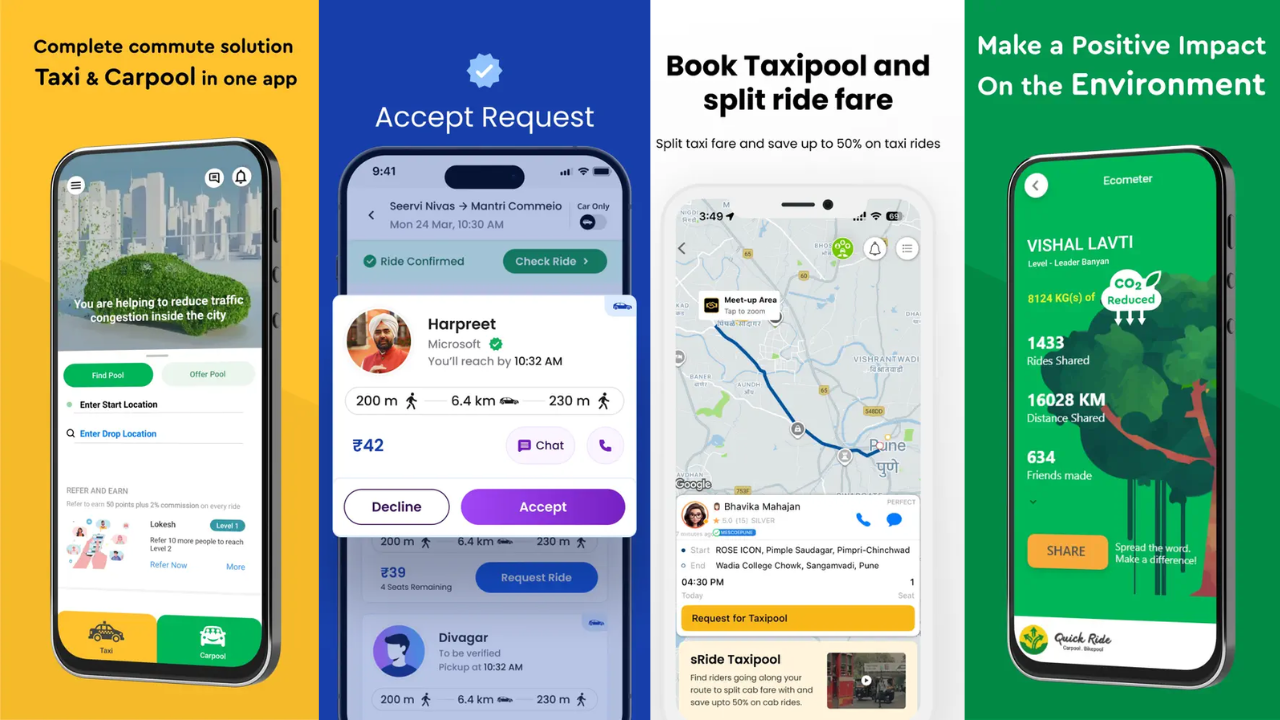
There are few ideas that align as neatly with India’s urban realities as carpooling. Yet, a decade on, the service exists largely at the margins.
The paradox is striking. India’s cities are defined by overcrowded roads, uneven public transport and long daily commutes that often follow predictable corridors. Millions of cabs carry a single occupant through congested streets, while buses and metros struggle with capacity and last-mile gaps. In theory, the empty cab seat represents urban mobility’s simplest value proposition.
For a brief period in the 2010s, technology appeared ready to unlock that efficiency at scale. Ride-hailing pioneers Uber and …