/
•
•
Detailed stories on technology startups, business and economic current affairs.
Despite its stated intent to steer clear of the consumer business, it has joined the fray for the auction of 5G spectrum and applied for a unified pan-India licence.



Editor's note: Over the course of the past few weeks, the Ahmedabad-based Adani group has made its intention to get into the telecoms business clear. But it will not be the consumer telecoms space dominated by Reliance Jio, Bharti Airtel and a highly indebted Vodafone Idea. Rather, it will go after the enterprise business that is likely to explode on the back of high speed 5G networks. Right off the bat, there’s a mismatch between its communication and actions on the ground. If entering the enterprise business is its objective, it could have paid the one-time non-refundable application fee of Rs 50,000 for allocation of spectrum for use in private data networks. Such spectrum for non-consumer telecoms use is governed by simpler rules. Instead, it has chosen to join the fray to bid for 5G spectrum through auction along with licensee companies. It has also applied for a unified licence for a pan-India service, and internet services for the Gujarat circle. The cost of spectrum in the auctions—to be held on 26 July—could run into millions of dollars. It is not immediately …

Despite its stated intent to steer clear of the consumer business, it has joined the fray for the auction of 5G spectrum and applied for a unified pan-India licence.
Editor's note: Over the course of the past few weeks, the Ahmedabad-based Adani group has made its intention to get into the telecoms business clear. But it will not be the consumer telecoms space dominated by Reliance Jio, Bharti Airtel and a highly indebted Vodafone Idea. Rather, it will go after the enterprise business that is likely to explode on the back of high speed 5G networks. Right off the bat, there’s a mismatch between its communication and actions on the ground. If entering the enterprise business is its objective, it could have paid the one-time non-refundable application fee of Rs 50,000 for allocation of spectrum for use in private data networks. Such spectrum for non-consumer telecoms use is governed by simpler rules. Instead, it has chosen to join the fray to bid for 5G spectrum through auction along with licensee companies. It has also applied for a unified licence for a pan-India service, and internet services for the Gujarat circle. The cost of spectrum in the auctions—to be held on 26 July—could run into millions of dollars. It is not immediately …

Elon Musk’s satellite internet promises a new way to get online. How will it coexist with the country's telecom giants?

A quarter with subscriber gains portends well for the telecom operator, but its underlying metrics tell a more cautious story.
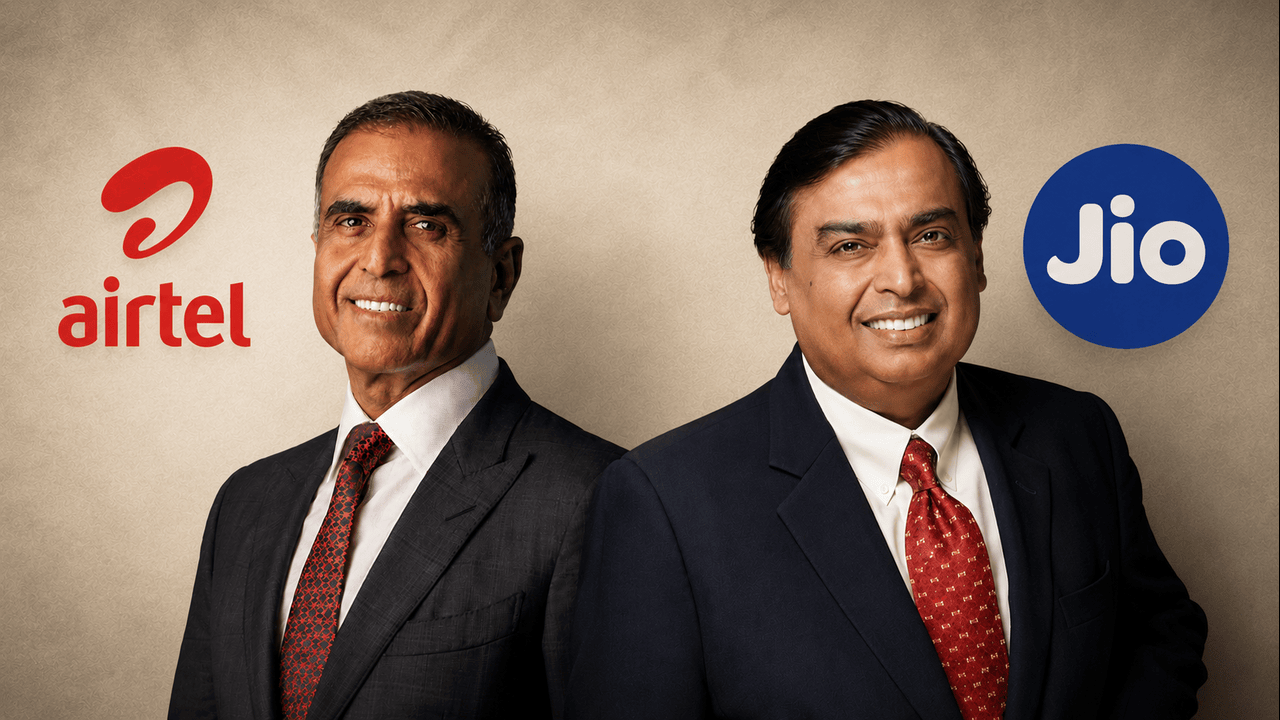
Instead of going after scale like Jio, the Sunil Bharti Mittal-led telecom giant is chasing a smaller but higher-quality customer base to grow its home broadband segment. Will the bet pay off?
Elon Musk’s satellite internet promises a new way to get online. How will it coexist with the country's telecom giants?
A quarter with subscriber gains portends well for the telecom operator, but its underlying metrics tell a more cautious story.
Instead of going after scale like Jio, the Sunil Bharti Mittal-led telecom giant is chasing a smaller but higher-quality customer base to grow its home broadband segment. Will the bet pay off?